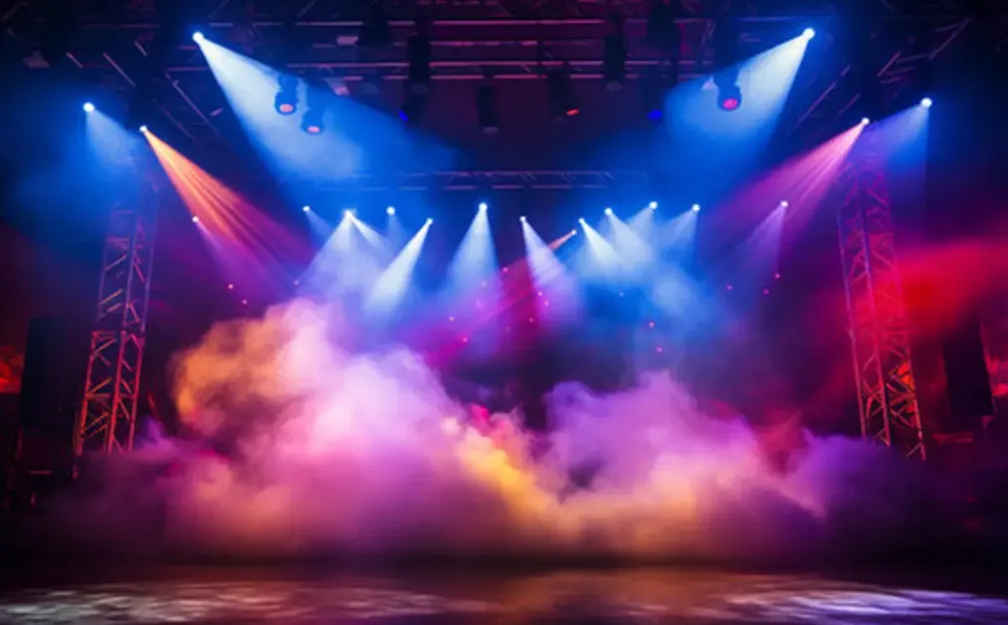
The Importance of Stage Lighting in Live Entertainment
Stage lighting is a key component in any live performance. At a concert, theater put on by a school, wedding reception, corporate function, or an outdoor festival, good lighting creates a mood, which also increases the audience’s ability to see what is before them. What is presented at this stage is that light is a form of art that adds story to the narrative, highlights presenters, and turns mundane spaces into extraordinary environments.
Advancements in lighting technology have enabled event organizers to present great visual effects, which at the same time are achieved with great efficiency and flexibility. Today’s fixtures offer the ability to program, to move dynamically, and to put out a wide range of colors and beam patterns, which can be used for many different events.
Key Types of Stage Lighting Equipment
Professional stage sets usually include a variety of lighting that serve distinct functions.
- Spotlights, which are very popular for putting the attention on performers or speakers.
- Wash lights, which provide even coverage over large areas.
- Beam lights, which produce narrow, intense beams of light that add a dramatic touch to live performances and concerts.
Another that is very popular is what is commonly known as the moving head light, which is to say it rotates and tilts at the direction of a computer. Programs are created which make the lights move as the performance does, which in turn makes for a very dynamic production. Also, because they are programmed, they may be made to play out light shows that correspond with music, which is also a great plus.
How Intelligent Lighting Has Changed Event Production
Traditional lighting, which was very much a do-it-yourself affair, has seen its creative boundaries, which artists worked within, grow small. What the industry has instead seen is intelligent lighting, which has transformed the game. Now fixtures at the drop of a hat can be controlled via digital lighting consoles.
These modern systems enable operators to preprogram light shows, automate transitions, and, at the same time, control multiple lights as a single unit. At the live performance, which is the perfect example, lighting can react in an instant to changes in music, stage action, or special effects. That level of exactness, which in turn creates very immersive experiences, also lessens the need for manual adjustments throughout the event.
Improvements have been made in the area of lighting, which now syncs with audio and video, which in turn has raised the bar for production quality and made professional lighting a more attainable asset for events of any size.
Laser Lighting in Modern Stage Design
Laser use has grown in the field of entertainment lighting, which can be seen in terms of the impressive visual results it produces. Lasers are commonly used at concerts, in dance shows, and in theme events, which they use to put on light shows of patterns, animations, and geometric shapes.
Today at your disposal are moving head laser lights, which combine the feature set of intelligent lighting instruments with laser projection. These systems put out laser beams that move around different areas of the venue as the built-in programming dictates, thus enhancing the total visual presentation. When put into the mix with other lighting tools, they play a role in creating multilayer lighting designs, which in turn capture the audience’s attention beyond what is possible with traditional fixtures.
Because lasers produce very focused light, it is important for them to be properly installed and operated, which in turn guarantees safe use at public events.
Choosing Lighting for Different Types of Events
Every event has its own lighting needs, which in turn are based on the event’s purpose, venue size, and audience expectations.
- Weddings: There is a trend toward elegant and warm lighting, which is used to create a welcoming feel as well as to put the focus on key moments like the ceremony and reception.
- Concerts: The focus is on dynamic effects, which include bright colors and synchronized light shows that play off of the live music.
- Corporate events: Presenters go for transparency in their delivery at the same time they maintain a professional look.
- Theater: There is very deliberate use of light to guide the audience’s attention and to play into the emotional tone of each scene.
- Outdoor festivals and large-scale events: There is the use of weather-resistant fixtures, which put out more brightness to guarantee quality.
Choosing the right light sets the stage for success in achieving what each event is to achieve, which also includes maintaining a consistent look.
Factors That Influence Lighting Performance
At present many technical issues play a role in the performance of stage lighting.
Some of the key factors include:
- Brightness is very important in large venues, which in turn require fixtures that can throw light to greater distances.
- Beam angle, which is the issue of how the light is directed, plays a key role from very narrow to widespread across large sections of the stage.
- Color in design is a tool that allows for the creation of almost infinite color schemes for various moods and themes.
- Movement speed, rotation range, and zoom features also play a large role in the flexibility of intelligent lighting.
- Durability is another key element. In the case of tour and event equipment, which sees extensive use and movement, that which is put out there should be built to handle transport, repeated setup, and long run times without performance drop-off.
Safety and Maintenance Considerations
Proper maintenance is key to good lighting performance. Dust on lenses and cooling systems which in turn reduces brightness and shortens equipment life is commonly observed. Also included should be regular cleaning, inspection of electrical connections, and software updates which in that which keep lighting systems running efficiently.
Safe practices in installation are of equal importance.
- Fixtures must be properly mounted with right hardware.
- Power distribution has to meet electrical safety standards.
- Operators should have enough training in programming, maintenance, and emergency procedures which in turn will reduce potential risks during live events.
The Future of Stage Lighting Technology
In the entertainment industry there is a trend toward adoption of new technologies that improve in terms of creativity and efficiency.
- LED technology has brought down energy use at the same time as it has increased brightness and operational life.
- The industry has seen the introduction of wireless control systems, which simplify installation by decreasing the use of cables.
- Advanced software enables designers to put together very complex lighting sequences.
Automation, integration of multimedia elements, and intelligent programming are to be primary trends in stage production. As technology advances, lighting designers will see to it that they come up with novel ways to improve performances, to present immersive experiences, and to put on visually stunning events for audiences all over the world.
